Stronger Every Day: The Connection Between Movement and Mindset

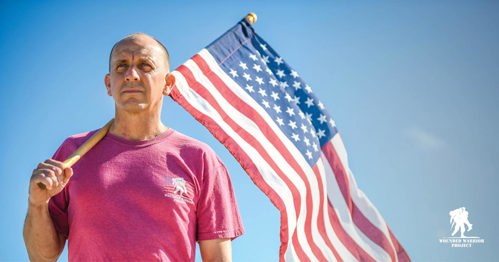
After years of trying to manage the physical and emotional effects from his time in the Marines, Sal Gonzalez no longer recognized the man staring back at him. The scale read almost 300 pounds. He was depressed and exhausted – not just physically, but mentally. His sleep was erratic. He was on edge. And his self-esteem had all but disappeared.

Sal knew he needed to reclaim his strength.

That’s when a friend stepped in and encouraged him to ask for help. With support from Wounded Warrior Project® (WWP), Sal began a journey that improved more than just his physical health — it helped him grow personally and professionally. 

Food as Love

Food is an important part of Mexican culture, so perhaps it was no surprise that growing up, Sal equated food with comfort.

“Food has been my happy place since I was a little kid,” he said. “Anytime I needed a boost — sad, overwhelmed, depressed — I’d grab a doughnut or a burger. And it worked. I’d feel better.”

At the time, Sal didn’t worry about how his habits would affect him in the future.  

“I’ve struggled with weight my whole life, especially because I dislike exercising. The only time I wasn’t overweight was when I was being paid to work out,” said Sal, who joined the Marine Corps in 2003.

Wwp22 0078 Mkt Dig Ogimg 1200X630px 6

Video 

Swallowing the Pain

If all you hear is negativity, even from yourself, it eats away at you.

Sal joined the 2nd Battalion, 5th Marines as a machine gunner, and a year later, in the fall of 2004, he deployed to Iraq. Not long after his arrival, Sal was hit by an improvised explosive device (IED), causing significant trauma that put him in a coma for a week and resulted in the loss of his left leg below the knee.

But the pain and trauma of his time overseas followed him home. “When you get blown up, it does something to your body, your brain. I came back changed,” said Sal.

He tried to power through the pain — both physical and emotional – but he relied on familiar coping strategies.

“I was eating like crazy. It wasn’t just comfort food — it was survival food,” he said. “Pizza, fast food, late-night snacks. I was just trying to get through each day.”

Veterans, PTSD, and Substance Use 
The National Institute on Alcohol Abuse and Alcoholism (NIAAA) reports that more than 50% of individuals with alcohol use disorder and co-occurring PTSD are military personnel and veterans.
Data from the Warrior Survey* shows over 43% of warriors who self-reported PTSD screened positive for potential hazardous drinking or active alcohol use disorders.

According to the Wounded Warrior Project Warrior Survey*, more than 8 in 10 warriors are overweight or obese. It is not uncommon for military veterans to become less active after transitioning to civilian life. However, a sedentary lifestyle increases the risk of physical and mental health challenges. 

Weight gain wasn’t Sal’s only challenge, though. He also turned to alcohol for relief. “I was self-medicating with alcohol just to be able to go out at night to play guitar and hang with friends. Then I’d drink myself to oblivion to go to sleep,” he recalled.

With each pound gained, feelings of self-doubt, depression, and questions about the future started to creep in. The pinnacle came when Sal looked down at the scale and read 298 pounds.

“At 250, I could still do a lot athletically. But nearly 300? That’s when I knew something had to change,” he said. 

Related Content

Wounded warrior Taniki Richards and her family hugging in a group photo outside of their house.

Serve Warriors and Their Families

Provide the most critical services to warriors most in need by assessing their challenges and prioritizing the programs we offer while improving their quality of life.

A wounded warrior shakes hand with a volunteer at an event.

Expand Impact Through Collaboration

Expand program partnerships with nonprofit, for-profit, and government agencies.

A group of supporters pose in front of Wounded Warrior Project’s headquarters with a big ‘Thank You’ sign.

Embody WWP Core Values and Culture

Foster a high-performing team that relentlessly commits to our mission, believes in our vision, and embodies our core values.

A Prescription for Better Health

Sal’s moment of clarity came during a vulnerable conversation with a friend. “We were talking, and I said, ‘I wonder if I have low testosterone,’” Sal recalls.

His friend encouraged him to get checked and even recommended a physician. Sal agreed. He was soon shocked to learn that his hormone levels were indeed out of balance. “My testosterone was that of a man nearly three times my age.”

The doctor also told Sal he was prediabetic and urged him to make changes to his diet and physical fitness.

Sal was not enthusiastic.Erik And Christine Schei

Changing how he ate and forcing himself to move didn’t sound like fun. But he was a father now and being present for his family motivated him.

“At the end of the day, I realized I was going to feel better. But I began to have a lot of anxiety and depression over how to get to an ideal weight,” he recalls.

According to the Wounded Warrior Project Warrior Survey*, more than 8 in 10 warriors are overweight or obese. It is not uncommon for military veterans to become less active after transitioning to civilian life. However, a sedentary lifestyle increases the risk of physical and mental health challenges. 

Weight gain wasn’t Sal’s only challenge, though. He also turned to alcohol for relief. “I was self-medicating with alcohol just to be able to go out at night to play guitar and hang with friends. Then I’d drink myself to oblivion to go to sleep,” he recalled.

With each pound gained, feelings of self-doubt, depression, and questions about the future started to creep in. The pinnacle came when Sal looked down at the scale and read 298 pounds.

“At 250, I could still do a lot athletically. But nearly 300? That’s when I knew something had to change,” he said. 

Veterans, PTSD, and Substance Use 
The National Institute on Alcohol Abuse and Alcoholism (NIAAA) reports that more than 50% of individuals with alcohol use disorder and co-occurring PTSD are military personnel and veterans.

Data from the Warrior Survey* shows over 43% of warriors who self-reported PTSD screened positive for potential hazardous drinking or active alcohol use disorders.

Don't know yet

Monday

Test test test as infobox - this would be more aligned with brand identity 

A Prescription for Better Health

Sal’s moment of clarity came during a vulnerable conversation with a friend. “We were talking, and I said, ‘I wonder if I have low testosterone,’” Sal recalls.

His friend encouraged him to get checked and even recommended a physician. Sal agreed. He was soon shocked to learn that his hormone levels were indeed out of balance. “My testosterone was that of a man nearly three times my age.”

The doctor also told Sal he was prediabetic and urged him to make changes to his diet and physical fitness.

Sal was not enthusiastic.

Changing how he ate and forcing himself to move didn’t sound like fun. But he was a father now and being present for his family motivated him.

“At the end of the day, I realized I was going to feel better. But I began to have a lot of anxiety and depression over how to get to an ideal weight,” he recalls.